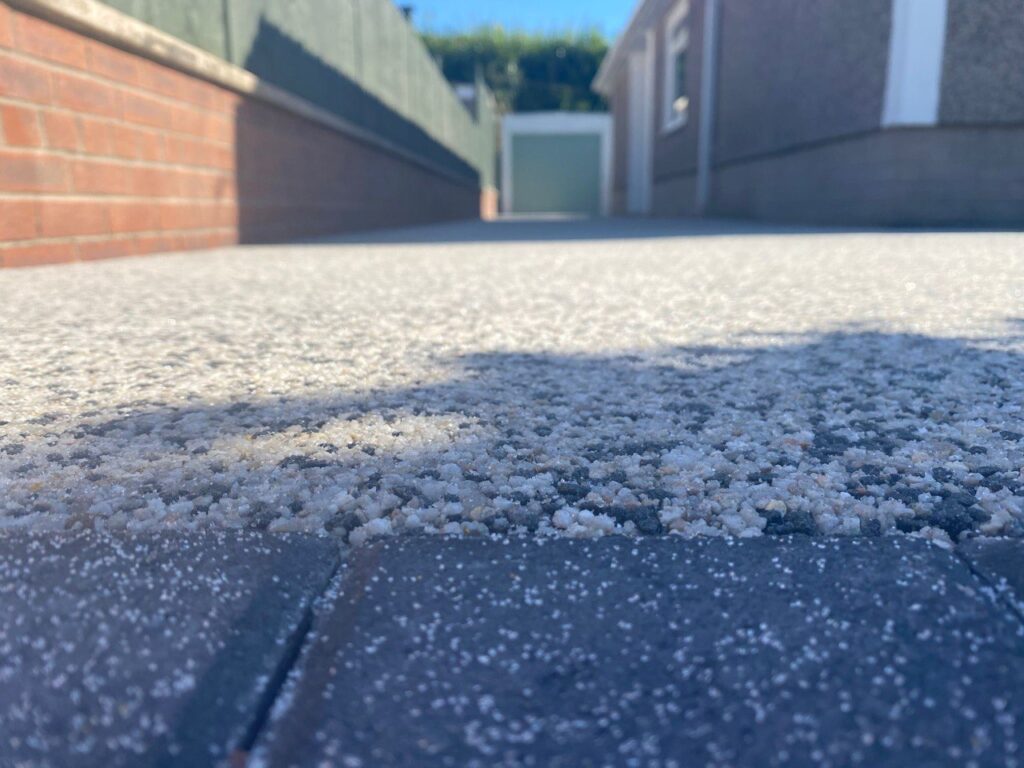
Why Have the Blocks on Your Driveway Started to Sink?
Block paving should provide a stable and even surface when it is supported by a correctly prepared base. If individual blocks or larger sections begin to sink, the problem usually lies beneath the visible paving rather than with the blocks themselves.
Sunken block paving can hold water, make vehicle access less comfortable and create uneven areas for pedestrians. For property owners in Haddenham, Cambridgeshire, identifying the underlying cause is essential before lifting and relaying the affected blocks.
What Causes Block Paving to Sink?
A block-paved driveway is made up of several connected layers. The paving blocks sit on a prepared bed of laying material, which is supported by a compacted sub-base. Edge restraints and jointing sand help the entire surface remain secure.
Movement in any of these components can reduce support beneath the blocks. The most common causes include inadequate preparation, water movement, weakened edges and concentrated vehicle loads.
An Inadequately Compacted Sub-Base
The sub-base distributes the weight of vehicles across the ground below. It must be installed to a suitable depth and compacted thoroughly in controlled layers.
If the material was not compacted evenly during construction, small voids may remain. These spaces can collapse gradually as vehicles pass over the driveway, causing the surface above to settle.
A thin or unsuitable sub-base may also compress under regular use. This often produces sinking along wheel tracks or in the area where vehicles are normally parked.
Soft or Unstable Ground Beneath the Driveway
The natural ground under a driveway must be capable of supporting the completed construction. Soft soil, disturbed ground and poorly filled excavations can continue settling after the paving has been installed.
Movement may be confined to one area, particularly where a previous trench, tree stump or excavation was filled without adequate compaction. In other cases, settlement may affect a much larger section.
Relaying the blocks without stabilising the ground will not provide a lasting solution.
Water Washing Away the Laying Material
Water is a frequent cause of sunken block paving. Damaged drainage, uncontrolled surface run-off or water entering through open joints can wash fine material away from beneath the blocks.
As the laying course loses support, the paving begins to dip. Water then collects in the depression, which can increase the movement and accelerate further deterioration.
The drainage problem must be corrected before the surface is reinstated. Otherwise, the same section is likely to sink again.
Loss of Jointing Sand
Jointing sand helps the paving blocks interlock and distribute pressure across the surface. It can gradually be removed by heavy rainfall, repeated cleaning, weeds or unsuitable pressure-washing methods.
When joints become empty, the blocks have more room to move. This movement can disturb the laying course and contribute to localised sinking, spreading or rotation.
Visible gaps between blocks are therefore more than an appearance issue. They can indicate that the surface is losing part of its structural stability.
Weak or Damaged Edge Restraints
The edges of a block-paved driveway prevent the blocks from moving sideways under vehicle pressure. If an edge restraint becomes loose, cracked or poorly supported, the paving can begin to spread.
As gaps develop, the laying material may escape towards the edge. Blocks near the boundary can then drop, tilt or separate.
Repairing the edge restraint is usually necessary before the affected paving is relaid and compacted.
Repeated Vehicle Loads
Driveways experience the greatest pressure where vehicles stop, turn or follow the same wheel path each day. Stationary steering can place considerable sideways force on the blocks, while heavier vehicles increase pressure on the supporting layers.
A well-built driveway should accommodate its intended use. However, if the original construction was not designed for the type or frequency of traffic it now receives, rutting and sinking may develop.
This is particularly noticeable near entrances, turning points and parking positions.
Tree Roots and Organic Material
Tree roots can affect paving in different ways. Growing roots may raise sections of the driveway, while decaying roots can leave voids that cause the surface to sink.
Buried organic material can produce a similar result as it decomposes. The extent of the affected area should be established before repairs begin, as simply adding more laying sand may not resolve continuing movement below.
Drainage Defects Near the Driveway
A leaking drainage pipe, damaged channel or poorly directed downpipe can saturate the ground beneath the paving. Prolonged moisture can weaken the sub-base and encourage fine particles to migrate.
Warning signs may include:
- Puddles forming in the same place
- Sinking close to a drain or channel
- Damp ground around the driveway edge
- Jointing sand repeatedly disappearing
- The repaired area settling again
- Several adjacent blocks becoming loose
These signs indicate that water management should form part of the assessment.
Why Adding Sand on Top Will Not Solve the Problem
Sweeping jointing sand into the surface can stabilise sound paving, but it cannot restore support beneath blocks that have already sunk. Similarly, filling a depression from above does not correct a weak sub-base or damaged laying course.
The affected blocks normally need to be lifted so that the underlying layers can be examined. Any soft, missing or unstable material can then be removed and reinstated before the blocks are relaid at the correct level.
Can Sunken Block Paving Be Repaired?
Localised sinking can often be repaired without replacing the entire driveway if the surrounding construction remains stable. The success of the repair depends on addressing the cause rather than only improving the surface level.
A professional assessment should consider:
- The pattern and depth of the settlement
- The condition of the sub-base and laying course
- Drainage and water movement
- Edge restraints
- Joint stability
- The vehicles using the driveway
- Signs of wider ground movement
If sinking appears across multiple sections, a broader investigation may be needed to determine whether the original base is generally unsuitable.
Conclusion
Blocks usually sink because support has been lost within the laying course, sub-base or ground below. Poor compaction, water movement, missing jointing sand, weak edges and repeated vehicle pressure are among the most common causes.
A lasting repair requires the underlying weakness to be corrected before the blocks are relaid. Haddenham Driveways can assess sunken block paving and recommend an appropriate solution based on the condition of the complete surface. If your driveway has developed dips or loose blocks, contact our team to arrange a professional assessment in Haddenham, Cambridgeshire.
Call us on: 01844 393 796
Click here to find out more about Haddenham Driveways
Click here to complete our contact form and see how we can help with your driveway needs.