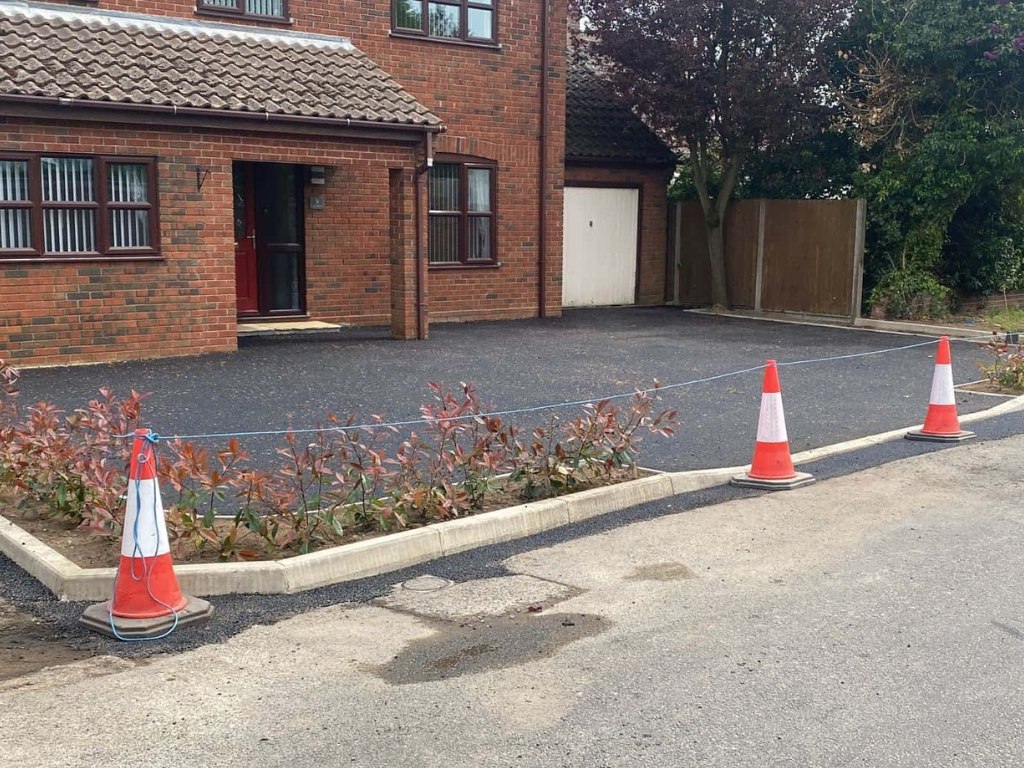
What Makes a Professionally Installed Block Paved Driveway Stay Stable?
A block paved driveway may be admired for its appearance, but its long-term performance depends just as much on what lies beneath the paving as the blocks visible at the surface. When correctly constructed, individual pavers work together as part of a carefully prepared system designed to cope with regular vehicle movements while maintaining consistent levels.
Problems such as sinking blocks, spreading joints, uneven areas and movement are often associated with weaknesses elsewhere in the construction rather than the paving blocks themselves. This is why professional installation is so important.
For homeowners in Haddenham, Cambridgeshire, Haddenham Driveways provides professionally installed block paving with careful attention given to preparation, support, drainage and finishing. Understanding these elements helps explain what keeps a well-built driveway stable.
Stability Starts Below the Surface
One of the biggest misconceptions about block paving is that the blocks provide all of the driveway’s strength.
In reality, the finished paving is only one part of the construction. The layers beneath must create a firm and consistent foundation capable of supporting the loads placed on the driveway.
A professionally constructed block paved driveway typically relies on several elements working together:
- Appropriate ground preparation
- A properly constructed sub-base
- Thorough compaction
- A consistent laying course
- Correctly positioned paving blocks
- Secure edge restraints
- Jointing between individual pavers
- Suitable surface levels and drainage
Weakness in any of these areas can affect the performance of the finished surface.
Why Ground Preparation Matters
Before paving begins, the existing ground needs to be properly prepared.
Simply laying blocks over an unsuitable or poorly prepared surface can result in movement later. Vehicle loads are repeatedly transferred through the paving into the layers underneath, so those layers need to remain stable.
Professional preparation establishes suitable levels and removes unsuitable material where necessary before the supporting construction is installed.
Getting this stage right provides a reliable starting point for everything that follows.
A Strong Sub-Base Provides Essential Support
The sub-base is one of the most important components of a block paved driveway.
Its purpose is to provide a strong, consistent foundation and distribute loads across the driveway rather than allowing pressure to become concentrated beneath individual blocks.
If the sub-base is inadequate, movement can eventually appear at the surface.
Possible signs of sub-base problems include:
Localised Sinking
Individual sections may begin settling lower than the surrounding paving.
Vehicle Ruts
Repeated vehicle movements can create visible depressions.
Uneven Areas
Groups of blocks may move together as the supporting material beneath them changes.
Recurring Movement
A repaired section may sink again if the underlying weakness was never corrected.
A professionally installed driveway therefore places considerable emphasis on the quality of its foundation.
Compaction Is Critical
Using suitable materials is only part of constructing a stable driveway. Those materials also need to be compacted correctly.
Proper compaction helps create a dense, stable supporting layer. If areas are insufficiently compacted, further settlement can occur once vehicles begin regularly using the driveway.
This can cause the surface above to change level.
Consistent preparation across the complete driveway is particularly important. A strong area beside a poorly compacted section can lead to uneven performance and visible differences in surface level.
The Laying Course Needs to Be Consistent
Above the sub-base sits the layer upon which the paving blocks are positioned.
This needs to be prepared accurately and consistently. Its purpose is not to compensate for major weaknesses below but to provide an even bed for the paving.
Variations at this stage can influence the finished levels and how well individual blocks sit alongside one another.
Professional installers work carefully to establish an even surface before the blocks are laid, helping create consistent support across the paved area.
Why Block Alignment Matters
Block paving gains much of its effectiveness from individual units working together.
Blocks should be positioned consistently according to the chosen laying pattern. Accurate spacing and alignment contribute to both appearance and performance.
Poorly positioned blocks can result in:
- Irregular joints
- Visible gaps
- Misaligned patterns
- Increased opportunities for movement
- An uneven finished appearance
Good workmanship ensures that individual pavers form one cohesive surface rather than behaving like unrelated units.
Edge Restraints Help Hold Everything Together
The edges of a block paved driveway perform an important structural role.
Without effective restraint around the perimeter, the outer blocks can gradually move outwards. Once movement begins at the edge, joints can open and neighbouring pavers may start shifting.
Properly installed edge restraints help contain the paving and maintain the integrity of the complete surface.
This becomes particularly important along areas regularly crossed by vehicle tyres or where the driveway meets other surfaces.
Jointing Helps Create an Interlocked Surface
The joints between paving blocks are not merely decorative gaps.
Correct jointing helps the blocks interact as a complete paved surface. When properly completed, the arrangement helps distribute loads between neighbouring units and reduces unnecessary movement.
Over time, joints should be monitored because loss of jointing material can affect how securely individual pavers remain positioned.
Maintaining the joints is therefore an important part of keeping block paving in good condition.
The Laying Pattern Can Influence Performance
Block paving offers considerable design flexibility, but the chosen pattern also affects how the finished surface responds to use.
On a driveway, the arrangement of the blocks should be suitable for regular vehicle movements. A professionally planned installation considers both visual appearance and practical performance.
The pattern should also be set out carefully so that cuts around edges, corners and other features integrate neatly into the overall surface.
This attention to detail contributes to the cohesive appearance associated with professionally installed block paving.
Correct Levels Help Manage Rainwater
A stable driveway also needs to manage rainfall effectively.
Water should not routinely collect in unintended depressions across the surface. Persistent standing water can sometimes indicate settlement or unsuitable levels and can make existing weaknesses more noticeable.
Professional installation considers the finished levels from the preparation stage onwards.
Rather than attempting to solve water movement after the paving has been installed, the driveway should be planned so that the surface performs appropriately as a complete system.
Why Driveway Edges Are Particularly Important
The central part of a driveway often receives support from paving on every side, while perimeter blocks naturally have less surrounding restraint.
This makes good edge construction especially important.
Where edges are weak, blocks can:
- Spread outwards
- Become loose
- Drop out of alignment
- Create wider joints
- Affect neighbouring paving
Once movement begins, it can gradually progress further into the driveway.
Strong edge detailing helps prevent this chain reaction.
What Causes Block Paving to Sink?
When block paving sinks, the visible pavers are not always the actual cause.
Settlement can occur because material beneath the surface has moved or was not adequately prepared.
Potential causes include:
- Inconsistent ground preparation
- Weakness within the supporting layers
- Insufficient compaction
- Localised ground movement
- Problems around previously disturbed areas
- Loss of support around edges
This is why simply lifting sunken blocks and adding material underneath them does not necessarily provide a lasting repair.
The reason for the settlement should first be established.
Why Professional Installation Reduces Future Movement
A professional installation approaches the driveway as a complete construction rather than focusing only on laying attractive blocks.
Each stage supports the next.
Well-prepared ground supports the sub-base. The compacted sub-base supports the laying course. The laying course supports correctly positioned blocks, while edge restraints and jointing help keep the completed paving securely integrated.
When these elements are properly coordinated, the driveway is better equipped to withstand normal vehicle and pedestrian use without developing unnecessary movement.
Stability Does Not Mean a Driveway Never Needs Maintenance
Even a professionally constructed driveway benefits from appropriate ongoing care.
Block paving is exposed to vehicles, rainfall, vegetation and everyday outdoor conditions. Monitoring the surface allows small changes to be identified before they become more significant.
Homeowners should pay attention to:
- Blocks beginning to move
- Loss of jointing material
- Small areas of settlement
- Damaged individual pavers
- Changes around driveway edges
- Areas where water unexpectedly collects
Early attention to localised defects can help protect the surrounding paving.
One Advantage of Block Paving Is Repairability
Individual paving units provide a useful advantage if a localised problem eventually develops.
Affected blocks can often be lifted, allowing the area beneath them to be examined. If the underlying issue is corrected and the surrounding construction remains sound, the paving can potentially be reinstated without disturbing the entire driveway.
Damaged individual blocks may also be replaced where suitable matching pavers are available.
This makes block paving a particularly practical surface when professionally constructed and maintained.
Why Accurate Installation Is Especially Important for Driveways
Driveways experience different demands from purely pedestrian areas.
Vehicle weight is repeatedly transferred through the surface, often along similar routes each day. Turning movements can also place additional forces on the paving.
A driveway therefore needs to be designed and constructed specifically for its intended use.
Professional installers consider how the surface will be used when planning the foundation, paving arrangement, edges and overall construction.
The Difference Is in the Complete Installation
It is easy to judge a newly installed driveway primarily by how straight the blocks look or how attractive the chosen paving appears.
Those details matter, but some of the most important work is no longer visible once installation has been completed.
The quality of excavation, preparation, sub-base construction, compaction and setting out has a major influence on how the driveway performs afterwards.
This is one reason two visually similar block paved driveways can behave very differently over time.
Why Choose Professional Block Paving Installation?
A professionally installed block paved driveway should combine appearance with sound construction.
At Haddenham Driveways, we understand that achieving a high-quality result involves much more than positioning paving blocks. The complete driveway needs to be planned around the site, ground preparation, intended use, levels and finishing details.
Careful workmanship throughout the installation helps create a driveway that remains neat, practical and stable while complementing the property.
Conclusion
The stability of a block paved driveway begins long before the first paving block is laid. Appropriate ground preparation, a well-constructed and compacted sub-base, consistent laying materials, accurate block positioning, effective jointing and secure edge restraints all contribute to the performance of the finished surface.
When these elements work together, vehicle loads can be supported more consistently and the risk of sinking, spreading and unnecessary movement is reduced. This is why professional installation is so important: the strength of block paving depends on the complete construction, including the parts that cannot be seen once the driveway is finished.
For homeowners in Haddenham, Cambridgeshire, Haddenham Driveways provides professional block paving installations designed with both appearance and long-term performance in mind. If you are considering a new block paved driveway, contact our team to discuss a professionally planned surface suited to your property.
Call us on: 01844 393 796
Click here to find out more about Haddenham Driveways
Click here to complete our contact form and see how we can help with your driveway needs.